

Exceptional customer service drives success in the wheelchair industry. As one of the leading B2B wheelchair manufacturers, TOUSDA Wheelchair prioritizes service excellence to differentiate our brand and build lasting client relationships. By addressing customer needs with precision and care, we create trust and establish partnerships that endure. Our commitment to service quality becomes our competitive edge, ensuring clients return and recommend our business to others.
Focusing on customer satisfaction not only strengthens our reputation but also positions TOUSDA Wheelchair as a reliable partner in mobility solutions.
Key Takeaways
- Great customer service creates trust and lasting partnerships in wheelchairs.
- Helping each client personally makes them happy and loyal.
- Talking often and helping after sales keep clients close.
- Ask for feedback and use it to make services better.
- Training workers well gives good service and builds trust.
Understanding Customer Service Excellence in B2B
Defining customer service excellence for B2B wheelchair manufacturers.
Customer service excellence in the B2B space goes beyond resolving issues. It involves creating a seamless experience that fosters trust and long-term collaboration. For B2B wheelchair manufacturers, this means understanding the unique needs of healthcare providers, distributors, and other clients. You must ensure that every interaction reflects professionalism, reliability, and a commitment to quality.
A comprehensive approach to customer service includes proactive communication, personalized solutions, and consistent follow-ups. By prioritizing these aspects, you can position your brand as a trusted partner in the mobility industry.
| Aspect | Description |
|---|---|
| Brand Research | Helps improve reputation and credibility by understanding client perceptions. |
| Personalization | Builds stronger relationships by addressing specific client goals. |
| Channel Optimization | Ensures smooth communication across platforms for a better experience. |
| Self-Service | Empowers clients with tools like portals and chatbots to stay informed. |
Key elements of exceptional customer service in the B2B context.
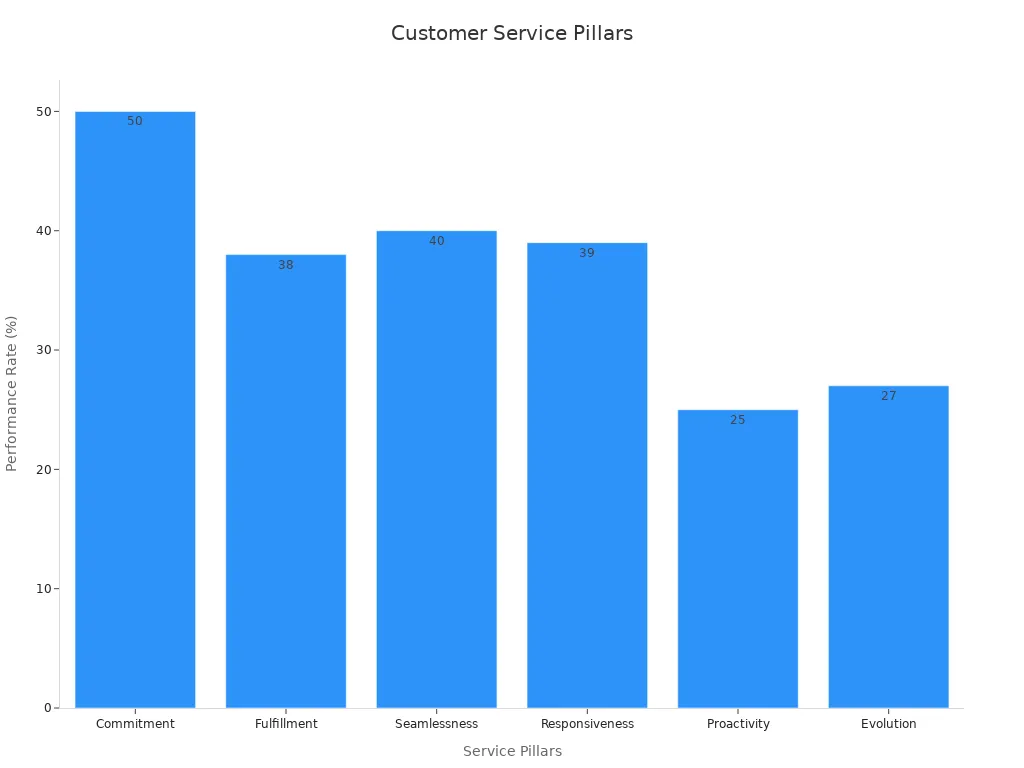
Delivering exceptional service requires a focus on key pillars that enhance the customer experience. These include commitment, responsiveness, and proactivity. As a B2B wheelchair manufacturer, you must demonstrate a deep understanding of your clients’ needs and deliver solutions that exceed expectations.
Responsiveness is critical. Timely communication across all touchpoints ensures clients feel valued. Proactivity, on the other hand, involves anticipating challenges and addressing them before they escalate. These elements not only improve satisfaction but also strengthen your reputation in the industry.
The importance of aligning service quality with client expectations.
Aligning service quality with client expectations is essential for building trust and loyalty. In the wheelchair manufacturing industry, clients often have specific requirements related to accessibility, compliance, and durability. You must tailor your services to meet these needs while maintaining high standards.
Regular feedback collection is a valuable tool for understanding client expectations. By acting on this feedback, you can refine your processes and deliver a superior experience. This alignment not only enhances satisfaction but also drives repeat business and referrals, solidifying your position as a leader in the market.
The Competitive Advantage of Customer Service Excellence
Enhancing brand reputation and credibility in the wheelchair industry.
Your brand’s reputation is one of its most valuable assets. In the wheelchair industry, where trust and reliability are paramount, delivering exceptional customer service can significantly enhance your credibility. When you consistently meet or exceed client expectations, you position your business as a dependable partner. This trust fosters positive word-of-mouth, which is crucial in the B2B sector.
Consider this: 64% of customers are more likely to recommend a brand that offers high-quality experiences. On the flip side, 58% of consumers will switch to competitors after disappointing interactions. By prioritizing customer service excellence, you not only retain existing clients but also attract new ones through referrals. A strong reputation built on exceptional service sets you apart in a competitive market.
Tip: Regularly assess your service quality to ensure it aligns with client expectations. This proactive approach strengthens your brand’s image and builds lasting trust.
Building customer loyalty through consistent service delivery.
Consistency is the cornerstone of customer loyalty. When you deliver reliable service at every touchpoint, clients feel valued and are more likely to remain loyal to your brand. For B2B wheelchair manufacturers, this means providing timely support, clear communication, and solutions tailored to client needs.
Statistics highlight the importance of loyalty programs in the B2B space:
| Statistic | Description |
|---|---|
| 90% of B2B loyalty programs | Achieve over 5% growth year-over-year (YOY), with more than two-thirds achieving over 10%. |
| 82% of programs | Achieved between 5% and 10% retention scores, highlighting the importance of customer retention in B2B. |
| 85% to 96% of programs | Achieve an ROI benchmark between 2:1 and 4:1, indicating the financial effectiveness of well-designed loyalty programs. |
These figures underscore the financial and operational benefits of fostering loyalty through consistent service. By focusing on reliability, you can create a foundation for long-term partnerships that drive mutual success.
Driving business growth with referrals and repeat clients.
Satisfied clients are your best advocates. When you provide exceptional service, they are more likely to recommend your business to others, creating a ripple effect that drives growth. Referrals are particularly impactful in the B2B wheelchair manufacturing sector, where trust and credibility play a significant role in decision-making.
Customer-centric businesses are 60% more profitable than those that neglect customer experience. This profitability stems from repeat clients who not only bring in consistent revenue but also reduce the cost of acquiring new customers. By focusing on service excellence, you can cultivate a loyal client base that fuels your business’s growth.
Note: Encourage satisfied clients to share their experiences through testimonials or case studies. These endorsements can serve as powerful tools for attracting new business.
Strategies for B2B Wheelchair Manufacturers to Achieve Excellence

Personalizing support to address unique client needs
Personalized support is essential for meeting the diverse requirements of your clients. As a B2B wheelchair manufacturer, you serve healthcare providers, distributors, and other organizations with unique goals. Tailoring your services to address these needs strengthens relationships and builds trust. For example, offering customized wheelchair solutions, such as cushions designed for specific pressure distribution, demonstrates your commitment to client satisfaction.
Advancements in technology, such as 3D printing, make personalization more accessible. Studies have shown that 3D scanning and additive manufacturing can create custom head supports and seating solutions with minimal technical expertise. These innovations allow you to deliver products that align with individual client specifications, enhancing their experience and satisfaction.
Tip: Collaborate with multidisciplinary teams to capture user needs effectively. This approach ensures that your solutions are both functional and tailored to the client’s requirements.
Implementing robust employee training programs
Your employees play a critical role in delivering exceptional customer service. Investing in robust training programs equips them with the skills needed to address client concerns effectively. Training should focus on enhancing communication, problem-solving, and product knowledge.
Metrics such as learner engagement and knowledge retention rates can help you measure the success of your training initiatives. For instance, tracking assessment pass rates and post-training performance improvements ensures that your team is well-prepared to meet client expectations.
| Metric | Description |
|---|---|
| Learner Engagement | Measures the time and effort learners invest in the learning process. |
| Training ROI | Assesses the efficiency or profitability of the training investment. |
| Training Experience Satisfaction | Gauges how satisfied learners are with the training received through post-training surveys. |
| Operational Efficiency | Tracks improvements in workplace processes post-training, such as reduced missed deadlines. |
| Assessment Pass Rates | Indicates the percentage of employees who successfully pass assessments, reflecting training effectiveness. |
| Employee Performance Post-Training | Measures improvements in employee performance metrics after training. |
By prioritizing employee development, you create a team that delivers consistent and high-quality service, fostering client loyalty and trust.
Leveraging technology like CRM systems and AI tools
Technology is a powerful ally in achieving customer service excellence. CRM systems and AI tools streamline operations, improve efficiency, and enhance the overall client experience. For example, AI-powered chatbots provide prompt support, reducing response times and handling routine inquiries. This allows your team to focus on complex customer needs.
Automation tools simplify repetitive tasks, freeing up resources for strategic growth. CRM systems enable better data management and real-time updates, ensuring that your clients receive accurate and timely information. Additionally, AI tools can personalize shopping experiences by analyzing data insights, boosting customer engagement and satisfaction.
| Evidence Description | Impact on Customer Service Efficiency |
|---|---|
| AI-powered chatbots provide prompt support, reducing response times. | Increases efficiency by handling routine inquiries. |
| AI enables better data management and real-time updates. | Streamlines data handling, enhancing service quality. |
| Automation of repetitive tasks allows focus on strategic growth. | Frees up resources for complex customer needs. |
| Satisfied customers become loyal, attracting new clients. | Enhances retention and brand reputation. |
| Personalization of shopping experiences through data insights. | Improves customer engagement and satisfaction. |
| 24/7 availability of AI chatbots resolves inquiries anytime. | Increases accessibility for global customers. |
| Natural Language Processing enhances understanding of queries. | Reduces manual effort and improves customer interactions. |
Adopting these technologies positions your business as a forward-thinking partner in the wheelchair industry, ensuring that your clients receive the best possible service.
Using customer feedback to refine and improve services.
Customer feedback serves as a cornerstone for refining and enhancing your services. By actively listening to your clients, you can uncover valuable insights that drive innovation and improve customer satisfaction. For B2B wheelchair manufacturers, this feedback can reveal opportunities to optimize communication, introduce new service offerings, or address specific client pain points.
Quantitative feedback, such as satisfaction surveys, provides measurable data to track your performance over time. These surveys allow you to identify trends and pinpoint areas needing improvement. For instance, if clients consistently highlight delays in delivery, you can implement strategies to streamline logistics. Structured feedback mechanisms, like the Net Promoter Score (NPS), also help you gauge customer loyalty and satisfaction. Tracking these metrics enables you to make data-driven decisions that enhance your service quality.
In addition to surveys, qualitative methods like interviews and social media monitoring offer deeper insights into customer experiences. These approaches help you understand the nuances of client expectations and preferences. For example, monitoring social media discussions about your brand can reveal recurring themes, such as the need for more accessible wheelchair designs or improved after-sales support. Acting on this information demonstrates your commitment to meeting client needs and fosters trust.
A client-centered approach to feedback collection not only identifies growth opportunities but also cultivates a culture of continuous improvement. When you implement changes based on customer input, you show that their opinions matter. This strengthens relationships and positions your business as a responsive and reliable partner. Over time, this proactive engagement builds loyalty and enhances your reputation in the competitive wheelchair manufacturing industry.
Tip: Regularly share updates with your clients about how their feedback has influenced your services. This transparency reinforces their trust and encourages ongoing collaboration.
Addressing the Unique Needs of Wheelchair Manufacturers

Understanding accessibility and compliance requirements.
Accessibility and compliance are critical in the wheelchair manufacturing industry. As a manufacturer, you must ensure that your products meet established standards, such as the 2010 ADA Standards, which set minimum requirements for accessibility in newly designed or altered facilities. Compliance with these standards not only ensures usability for individuals with disabilities but also enhances your credibility as a trusted provider.
For example, a 2017 independent ramp study revealed that only two out of seven ramps met ADA requirements. This highlights the importance of rigorous testing and adherence to compliance guidelines. Additionally, the Access Board’s proposed rule for medical diagnostic equipment emphasizes the need for low transfer heights, such as 17 inches, to maximize independent transfers. By prioritizing these factors, you can create products that truly serve the needs of your clients and their end-users.
| Study Title | Findings | Compliance Level |
|---|---|---|
| ADA Compliance Testing – Independent Ramp Study 2017 | SafePath Products ramps met ADA standards, while most others did not. | Only 2 out of 7 ramps met ADA requirements. |
Offering tailored solutions for healthcare providers and distributors.
Tailored solutions are essential for meeting the diverse needs of healthcare providers and distributors. Each client has unique requirements based on their operational goals and the populations they serve. By offering customizable options, such as specialized wheelchairs with commode features or adjustable seating, you demonstrate your commitment to addressing these specific needs.
The wheelchair manufacturing market is projected to grow at a compound annual growth rate (CAGR) of 7.5% from 2025 to 2037, reaching a market size of USD 14.44 billion. This growth underscores the increasing demand for innovative and adaptable solutions. However, challenges such as high costs and infrastructure barriers persist. Addressing these issues through tailored offerings can position you as a leader in the industry.
- High costs of advanced wheelchairs limit access for users in low-income areas.
- Infrastructure barriers hinder mobility and independence for wheelchair users.
Ensuring proactive communication and after-sales support.
Proactive communication and robust after-sales support are vital for building trust and long-term relationships. You should maintain open lines of communication with your clients, providing regular updates on order statuses, product innovations, and compliance changes. This transparency fosters confidence and ensures that clients feel valued.
After-sales support plays an equally important role. Offering services like maintenance, troubleshooting, and training ensures that your products perform optimally over time. For instance, providing detailed user manuals or video tutorials can empower clients to address minor issues independently. By staying engaged with your clients even after the sale, you reinforce your reliability and commitment to their success.
Tip: Use CRM systems to track client interactions and automate follow-ups. This ensures no communication gaps and enhances client satisfaction.
Building long-term relationships through trust and reliability.
Establishing trust and demonstrating reliability are the cornerstones of building long-term relationships in the B2B wheelchair manufacturing industry. Your clients, whether healthcare providers or distributors, rely on you to deliver consistent quality and dependable service. By meeting these expectations, you position yourself as a partner they can count on for years to come.
Trust begins with transparency. Sharing clear and accurate information about your products, delivery timelines, and compliance standards reassures your clients. When you communicate openly, you reduce uncertainties and foster confidence in your business. Reliability, on the other hand, comes from consistently delivering on your promises. Whether it’s meeting deadlines or providing after-sales support, your actions must align with your commitments.
To strengthen these relationships, consider the following strategies:
- Be proactive in communication: Regular updates on order statuses or new product developments keep clients informed and engaged.
- Offer consistent quality: Ensure every wheelchair meets the same high standards, reinforcing your reputation for excellence.
- Provide dependable support: Quick responses to inquiries and efficient problem resolution show your dedication to client satisfaction.
Tip: Use a CRM system to track client interactions and preferences. This helps you anticipate their needs and personalize your approach, further building trust.
Long-term relationships also thrive on mutual respect. Listening to your clients’ feedback and acting on their suggestions demonstrates that you value their input. Over time, this collaborative approach fosters loyalty and positions your business as a trusted partner in the mobility industry. By prioritizing trust and reliability, you not only retain existing clients but also attract new ones through positive referrals and word-of-mouth endorsements.
Customer service excellence is more than a strategy; it is a cornerstone for success in the wheelchair manufacturing industry. By prioritizing personalized experiences and proactive communication, you can build trust and foster long-term partnerships. This approach not only enhances client satisfaction but also drives repeat business and referrals, solidifying your position in the market.
| Statistic | Source |
|---|---|
| 80% of consumers are more likely to purchase from brands offering personalized experiences. | Statista |
| 73% of consumers will switch to a competitor after multiple bad experiences. | Zendesk CX Trends Report 2023 |
| 81% of business leaders see customer experience as a growing priority over the next year. | Zendesk CX Trends Report 2023 |
Adopting a customer-centric mindset ensures you stand out in a competitive landscape. When you align your services with client expectations, you create a foundation for sustainable growth and industry leadership.
FAQ
What makes customer service excellence important for B2B wheelchair manufacturers?
Customer service excellence builds trust and fosters long-term partnerships. It helps you meet client expectations, enhance satisfaction, and drive repeat business. In the competitive wheelchair industry, exceptional service differentiates your brand and strengthens your reputation as a reliable partner.
How can technology improve customer service in wheelchair manufacturing?
Technology like CRM systems and AI tools streamlines communication and automates routine tasks. These tools help you manage client data, provide faster responses, and personalize interactions. By leveraging technology, you can enhance efficiency and deliver a superior customer experience.
Tip: Use AI-powered chatbots to handle inquiries 24/7 and improve accessibility.
Why is feedback collection essential for improving services?
Feedback helps you understand client needs and identify areas for improvement. It allows you to refine processes, introduce new solutions, and address pain points. Acting on feedback demonstrates your commitment to client satisfaction and builds stronger relationships.
What role does employee training play in customer service excellence?
Well-trained employees ensure consistent and high-quality service. Training enhances their communication, problem-solving, and product knowledge. This equips your team to address client concerns effectively, fostering trust and loyalty.
How can wheelchair manufacturers address accessibility requirements?
You must design products that comply with accessibility standards like ADA guidelines. Focus on features like low transfer heights and durable materials. Compliance ensures usability for individuals with disabilities and strengthens your credibility as a trusted manufacturer.
Note: Regularly review compliance updates to stay ahead of industry standards.
